blog

Language, the Mind, and the East vs. the West

Are we, in the West, overly consumed with creating validity through language? In other words, by naming something do we legitimize (or at least think we legitimize) something ie., eliminate the possibility of debate? 

I’m overly obsessed with language and the question of how it affects the way our mind functions analytically, so I was intrigued by Perry Link’s recent New York Review of Books blog post pondering the possibility that Western languages’ preference for nouns in contrast to Eastern languages’ preference for verbs, might lead Westerners to think something exists simply because a noun (label) for it exists. 

Continue reading “Language, the Mind, and the East vs. the West”

On our absurd art

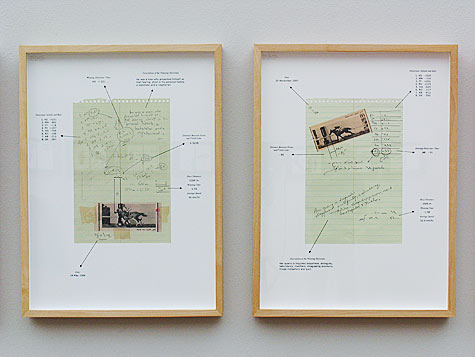
Image Caption: The Atlas Group – Walid Raad, Notebook volume 72: Missing Lebanese wars, 1989. Attributed to: Dr. Fadl Fakhouri. ©Photo: Walid Raad. Repro: Haupt & Binder.

Contemporary art is at odds. On the one hand it is interested in temporality and the dissolution of the individual as its practitioners attempt to extricate themselves and their work from the grips of the art industrial complex.  On the other hand it is consumed with creating information about art events, thereby preserving it (if you haven’t stopped to look around, much of our art is documentation in one form or another). It seems that, try as we might, despite a million desires and predictions to the contrary, we cannot allow the art object to die.

Continue reading “On our absurd art”

Time’s Arrow

In Time’s Arrow Tod remembers the past but we, we encounter what it would be like to only remember the future.

It’s chilling to think about, the possibility of life moving in reverse. It’s an idea that is incomprehensible and yet somehow an idea we’ve been mulling over for our eternity, how many times have you heard someone assert something ended before it began?

But really, really think about it. What would it look like? Martin Amis has an idea. It looks like cab drivers paying passengers, bodies becoming stronger, hookers paying their clients, breakups beginning relationships, the knowledge of impending war or disaster, dirty dishes being set on a table, and doctors mutilating their patients. 

Continue reading “Time’s Arrow”

On the limits of critique

The premise of Rita Felski’s (University of Virginia Professor of English) argument in her most recent book The Limits of Critique, or the point rather, is that the time is ripe for us to spend time critically analyzing critique itself; to dissect how we recognize it, how it has evolved, and ask how or if the suspicious reading that is its modus operandi has gone too far. She argues the onus critical theorists and academics have placed on critique, the dominant position we have created for it in discourse, and our subsequent forsaking of the alternatives, has nearly eliminated the possibility of (my words here) pleasurable reading.

Continue reading “On the limits of critique”

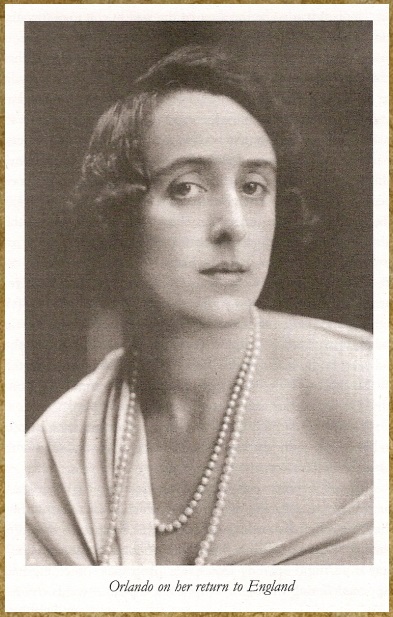
Orlando, orlando, orlando

Orlando, orlando, orlando. Could there be a more exhilirating account of the writer’s life? 

From the opening line Woolf announces the freewheeling narrative style she intends to adopt in her whimsical, slightly off “biography” of the Elizabethan aristocrat Orlando (a stand-in for Woolf’s lover Vita Sackville-West) who is constrained by nothing: not time, or sex, or tradition, in a majestic critique of biography, fact, and societal “norms.”

Orlando (and Woolf’s subversive writing style, in all of its breaking of the fourth wall and sly jabs at the dominant male voices of the age) was a modernist before his time. A solitary wanderer, an amateur poet, royalty. A boy who despite his position, finds himself perpetually shifting between emotional extremes, riding high on life only to fall into the depths of despair. Why? Orlando is a writer. And embedded in a raucous adventure story masquerading as biography, we find Woolf is documenting nothing other than the life of a writer, long before we as a culture spent countless words analyzing said life. And who better to lay it out? Woolf knew it, in all of its self-doubt and contradiction, all too well.

“Anyone moderately familiar with the rigours of composition will not need to be told the story in detail; how he wrote and it seemed good; read and it seemed vile; corrected and tore up; cut out; put in; was in ecstasy; in despair; had his good nights and bad mornings; snatched at ideas and lost them; saw his book plain before him and it vanished; acted people’s parts as he ate; mouthed them as he walked; now cried; now laughed; vacillated between this style and that; now preferred the heroic and pompous; next the plain and simple; now the vales of Tempe; then the fields of Kent or Cornwall; and could not decide whether he was the divinest genius or the greatest fool in the world.”

Woolf (seemingly forever tongue-in-cheek) describes Orlando’s love of literature as a disease, an infection, which grows in solitude and leads to an even worse disease – writing. When Orlando catches it, he literally loses years. 

Because of course, as only a writer can know, and as only a writer can dictate, life is not constrained by time.

“Life seemed to him of prodigious length. Yet even so, it went like a flash.”

Orlando is a fantasy novel. In a way. For Orlando is not tethered to time (or anything else for that matter): he falls asleep for days, wakes up in a new century, wakes up a woman. Because why not? “The extraordinary discrepancy between time on the clock and time in the mind is less known than it should be and deserves fuller investigation,” Woolf writes as a biographer’s aside. “The true length of a person’s life…is always a matter of dispute.” Does it not live on, on the page anyways, indefinitely? 

Orlando wallows in the benefits of obscurity and despairs of discovering truth. Words come when she least expects them, when it would be “impossible” for them to appear, and fail him when he tries. She is entranced with the world and sick of it in equal measure. She is on a perpetual rollercoaster between the need for solitude and the desperate craving for companionship, romantic companionship particularly. 

“I have sought happiness through many ages and not found it; fame and missed it; love and not known it; life — and behold, death is better. I have known many men and many women, none have I understood.” 

As some know only too well, brilliance comes only when it is least expected. When Orlando becomes neither submissive to, nor combative of, life and her age, only then can she write. And she writes and writes and writes. 

Of course Woolf also offers herself, in the guise of the biographer, as an exemplar of the writing life. “Thought and life are as the poles asunder,” her biographer declares. So when Orlando sits, there is nothing for the biographer to describe, “life, the same authorities have decided, has nothing whatever to do with sitting still in a chair and thinking.”

The great paradox of writing. Something others have written about far more beautifully than I: “One can never be alone enough to write” (Susan Sontag), the need for, and hatred of, solitude. The need to be of the world and at the same time to be apart from it.

“What is more humiliating than to see all this dumb show of emotion and excitement gone through before our eyes when we know that what causes it— thought and imagination—are of no importance whatsoever?” Woolf facetiously asks, poking a zillion holes in the historian and encyclopedist’s sorry attempts at documentation. It’s not facts that matter silly, she seems to be saying, thought and imagination are the only things that matter.

Orlando concludes abstractly, but before Orlando buries her manuscript near the oak tree which inspired her lifetime spent in search of truth, a life spent writing, she feels the insatiable desire to have her work read. And read it is,  leaving Orlando with a giant weight lifted, a weight he/she has carried with her, as we all have, throughout the tortuous writing process. 

By freeing Orlando of any and all constraints, and any and all absolutes, Woolf has provided her readers with the most gloriously liberating, entertaining, and enlightening account  of the writer’s life anyone had seen up until that point (or, I would argue, will ever see again). Orlando is of course about much more than writing, but writing, for many of us, is life.
The Fragility of Technology

Since I have little time for my own long-form blogging, cross-posting a review of Jeff Zilm’s work I did for the Observer. (Photo Credit Kevin Todora)

Dallas artist Jeff Zilm is engaged in a quest to determine the role art can play in a world riddled with images: What meaning can it possibly have to offer a world over-saturated with visual stimuli?

Specifically, Zilm has his eye on the technology of film and how the medium has transformed not only how we experience the visual world, but also how the comprehensive technology inherent to it is in large part responsible for our image fatigue. In an effort to explore the things which have changed our perception of the visual, Zilm utilizes the tools of the medium itself both symbolically and abstractly, to propose a new artistic language: a language built from deconstruction.

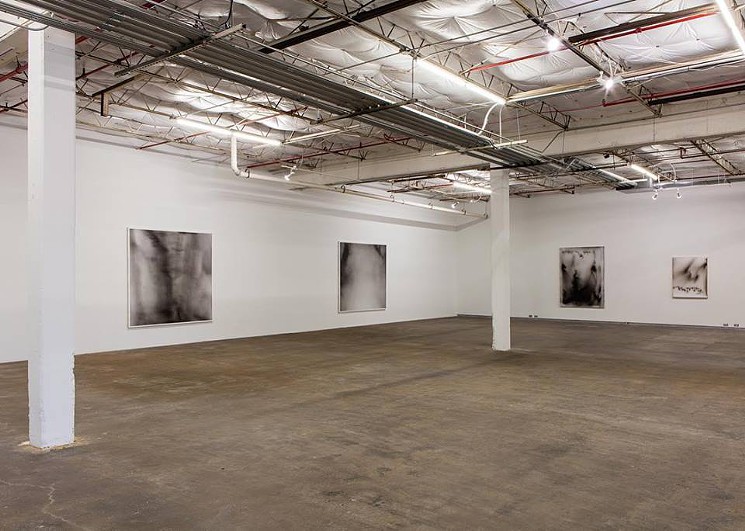
In Lossless Forms for Picture Plane, an overwhelming display of Zilm’s large canvases, ready-made sculptures and film work, on view at the Dallas Contemporary through March 20, audiences have, for the first time, the opportunity to see Zilm’s various bodies of work side by side, grasping the commonalities between his various artistic explorations as they gaze.

Upon entering the Contemporary’s cavernous space, viewers are greeted by an array of Zilm’s “film” paintings; Zilm created the menacing (a descriptor I found myself coming back to throughout the show) gray-scale canvases by liquefying the emulsion from 8mm, 16mm and 35mm black and white films and then brushing or spraying the results across the canvases. The sinister beauty of the works repels at the same time as it attracts, while remaining planted firmly in a history of abstract painting and canvas-based art, without even an awareness of the fact that each painting contains a single film in whole. Zilm tampers with the complex visual information of a film, contained in the mechanisms for recording that information, reducing it to, as far as pure information is concerned anyway, meaninglessness.

Alongside the sculpture Zilm has created from a complete print of the film Alien located in another section of the gallery (an apt choice of film to accompany the eerily alien paintings that surround it), these film-centric works’ strong focus on the art of film and its relationship to the technical tools of film prompts a reconsideration of the meaning we think we’re receiving from the information-laden medium. The pieces work together to prompt a rather stunned response from the viewer, a “Really? This is it?” feeling of discomfort and disappointment in a medium which consistently asserts its omnipotence; a shocking critique of the meaningful, panoptic experience we have, or at least think we have, with film.

The funny thing is that despite having reduced the information contained on the film almost entirely to abstraction, there’s an eerie feeling of recognition as you wander around the exhibition space, the inverse of the idea Zilm seems to be teasing out of his images: the idea that in the 21st century we are perpetually seeing without recognizing.

In later galleries we encounter Zilm’s less interesting “password “paintings, narrow, creatively installed depictions of various combinations of real passphrases which crop up in unusual spots throughout the exhibition space, a tacit reminder of the technology inherent to all that we do, including the conceit inherent to Zilm’s technology-laden analog art.

We also find the space obstructed and our path through the gallery pre-determined by oversize metal sculptures reminiscent of the television and radio antennas we mostly left behind with the turn of the millennium. The, again, alien-like qualities of the oversized sculptures of (formerly) banal household objects are jarring as they dictate our experience of the space — like film, in a way. The sculptures, like Zilm’s paintings, are menacing only if they’re not considered fully. They are, in reality — like film and the images it contains — more fragile than aggressive.

Zilm, like many artists in 2016, is concerned with the paradoxes of life in the 21st century. He’s also interested in the dual nature of film — its power to revolutionize and evolve our experience of the visual world in wholly new ways, at the same time as it desensitizes us, in its ubiquity, to the image’s power. In his work he is not-so-subtly tackling the incongruence between the seemingly all-powerful onslaught of the Internet, film and technology as a whole, and its truly innate tenuousness, pointing out in his intentional destructions and his simple illustrations of the passwords which have come to rule our lives, that the “real” is often self-destructing before our eyes.

To Live A Life

“A bird is an animal with an inside and an outside. Take away the outside and the inside is left. Take away the inside and you see it’s soul.”

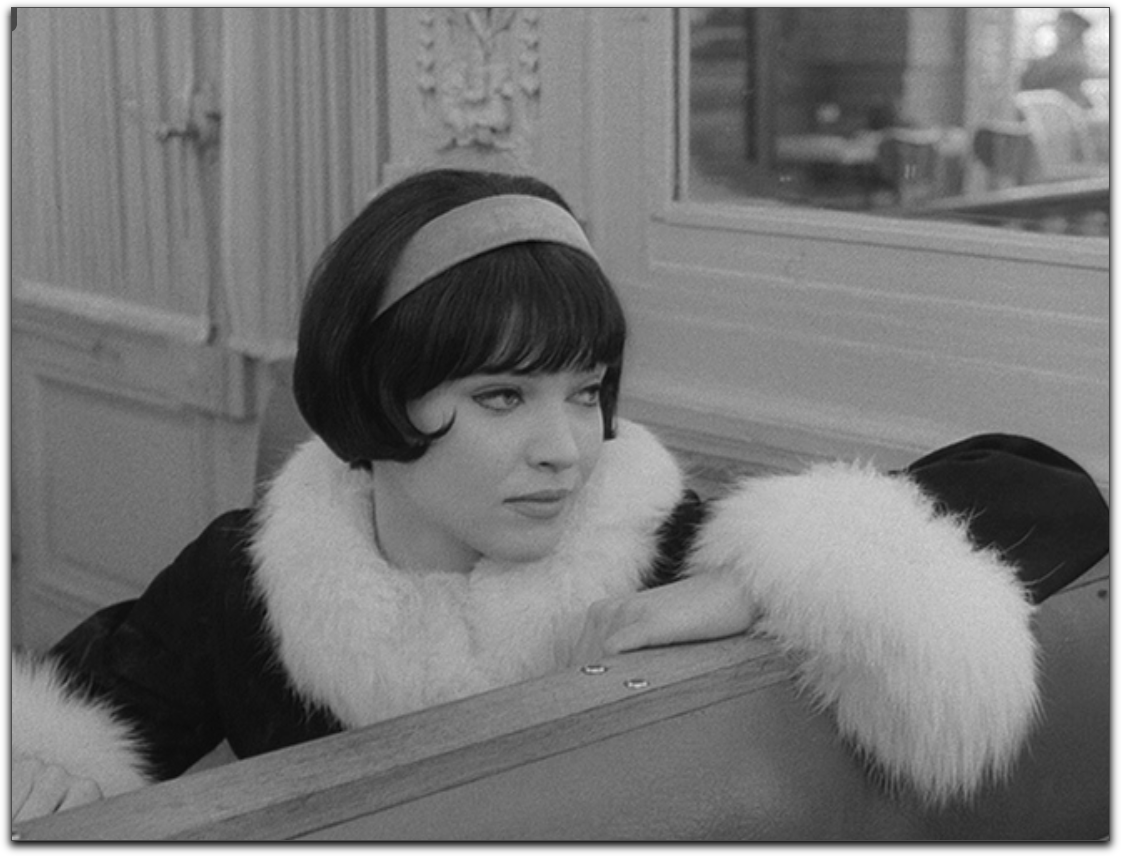
In Vivre Sa Vie Jean-Luc Godard juxtaposes a tragic story with stylistic camera work and affectless acting to create a wholly surprising film.

Continue reading “To Live A Life”

Who’s your audience anyway?

There’s a point, early on, in Margo Jefferson’s Negroland in which Jefferson pauses. “All readers are strangers,” she says. “Right now I’m overwhelmed by trying to calculate, imagine, what these readers might expect of me.”

In a lovely stylistic flourish, Jefferson actually spends much of her moving, memoiresque book pausing to address the reader directly, but you may be wondering, as I was, who exactly does Jefferson think that reader is?

Continue reading “Who’s your audience anyway?”

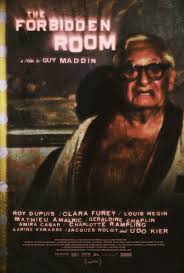
The weird cinematic world of Guy Maddin

“The more manipulated things are, the less likely people are to be misled.”

An a propos line for film auteur Guy Maddin to offer up in response to an interview question concerning the blurry line between fiction and non-fiction created in some of his films. That’s the allure of speculative art really, one can create a world as strange as one can imagine: the weirder it is, the less likely we are to be confused.

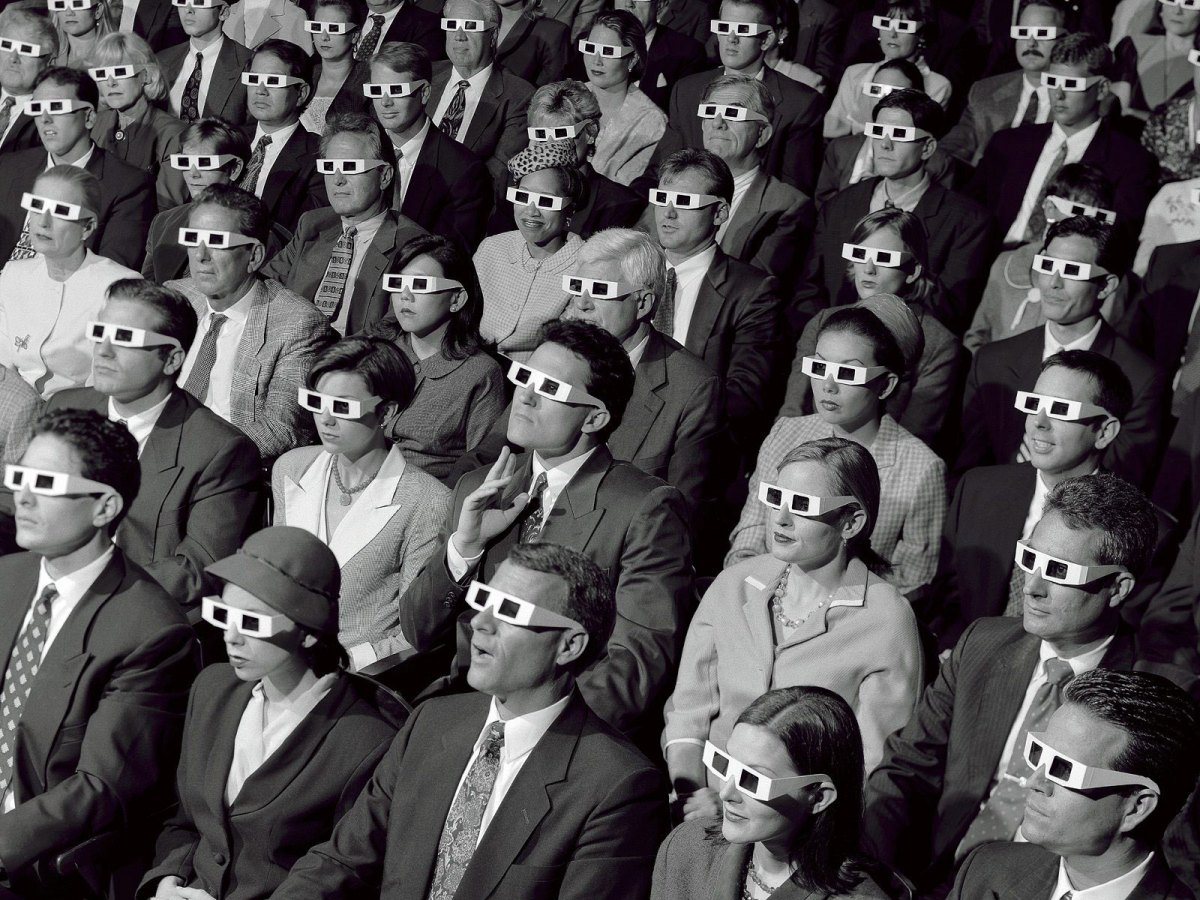
Much has already been written of Maddin, as is true of any artist who has attained even a nominal level of fame in 2015, but many of Maddin’s biggest fans are film geeks, and I mean film geeks; those people who, like Maddin, enjoy destroying, tampering with or in any other way possible interfering with the medium, the raw material, of film itself.

Continue reading “The weird cinematic world of Guy Maddin”

A Breath of Life: The Poetic Prose of Clarice Lispector

Set up with a simple conceit, A Breath of Life portends to document a conversation between the “Author” and his creation, a woman, he has named Angela Pralini, stand-ins for, at the same time, a thinly veiled invocation of a god-creation relationship and, perhaps, Lispector’s dueling inner voices.

I would launch my Clarice Lispector tour with the least accessible entry into her already difficult oeuvre. A Breath of Life isn’t a typical Lispector novel (if there is such a thing), in fact, the book isn’t really by Lispector in the strict sense at all. Instead, left unfinished upon her death, the book was posthumously pieced together and published from fragments, by her friend and confidant Olga Borelli.

Knowing that, it’s nearly impossible to read the book without seeing Lispector’s illness and impending demise as the through-line; Lispector, growing increasingly sure her cancer would soon defeat her, pens her confessions, her sorrows; the last thoughts and ramblings she does, and, perhaps at the same time doesn’t, want to leave with the world.

Continue reading “A Breath of Life: The Poetic Prose of Clarice Lispector”