blog

the man with(IN) MY head

It’s a rare occurrence to come across something genuinely transformative. Rarer still to be paying enough attention to fully realize something’s transformative potential when you find it.

As someone with a myriad number of interests, unceasingly ready to move on to the next thing simply because for me, there are so many things, I struggle with what I hear referred to often as “mindfulness.” In other words, living one’s life fully invested in each and every moment.

On a favorite radio show I recently listened to a doctor discuss the subject and what he described as our human propensity to “mind-wander.” Apparently it’s totally normal for your mind to want to wander during various, especially mundane, activities. Driving to work, for example. But that “mind-wandering” is also the source of many thinking people’s, let’s say, lack of satisfaction, because unhappiness seems too strong a word. It’s a source of stress, I’ll put it that way. Makes sense, when you’re thinking about how late you’re going to be for work or all the things you need to do when you get there for example, you’re dissatisfied, you feel a need to hurry.

Totally. Normal.

Or, as perhaps a better example, think of all the times when you’re at work and thinking about all of the things you’d rather be doing, or need to be doing, that aren’t work. You probably find, as I do, it’s quite easy to wish your entire day away that way. Your entire day, every day.

If your mind, like mine, by nature tends toward a slightly morbid train of thought it’s not hard to see how that can easily turn in to the wishing away of your entire life.

De.Press.Ing.

Just because it’s normal to mind-wander doesn’t mean we all do it, or that we all do it to the same degree, or that we would all admit this mind-wandering causes us unhappiness. For me, however, it is the source of a great deal of unhappiness, not least because I’m hyper-aware of its easy to ignore consequences, imagining myself always as the 80-year old woman who tells a friend how she wished she would have been enjoying life all those years instead of wishing them away, waiting for what’s next instead of realizing it was already there.

So the desire to live a more mindful life has been taking the form lately of me trying very hard to focus on enjoying what I’m doing right now, whatever it is, instead of wishing for 5 o’ clock, or Friday night.

It’s also been manifesting itself in more concrete resolutions.

As a voraciously competitive reader, I’m often really guilty of only halfway reading a book, something I attribute in large part to the hurry up and finish attitude that is totally understandable considering how many books are on my reading list at all times (and ever growing I might add).

Again, totally understandable not only thanks to an obsessive personality, but also because of the nature of life in our ADD-addled 21st century.

Point of all of this is to say that my goal, one of many really, for 2015, was to live mindfully, all the time. So far, if you were wondering, it’s greatly improved my work ethic because it’s greatly improved my attitude about being at work in the first place. It’s amazing how much a sense of accomplishment contributes to continued ability to accomplish.

I’ll also give this whole mindfulness stuff credit for what I hope is only the first of many transformative reading experiences to come in 2015.

The book was The Man Within My Head, by, wouldn’t you know it, mindfulness expert himself Pico Iyer.

It’s almost stupid this book. Stupid in how closely Iyer’s interpretation of Greene’s psyche mirrors my own, and, I’m grasping for words here, but for lack of something better, how freakishly astute Iyer’s ability to explain, in the perfect language, in a way I never could, why I have consistently gone back to Graham Greene’s novels over the course of my lifetime (and in the process explain me, better than me.)

Of course the whole premise of the book is how Iyer felt that Greene was ‘in his head’ as it were as he has traversed the world in his own lifetime. It’s a memoir, utterly creative in its telling, as it uses Iyer’s interpretation and second-hand knowledge through biographies, friends etc., of Greene’s life, perhaps the most formative author in his (Iyer’s) life, to shed light on the impulses that drove him, and decisions that he made.

It sounds weird, and boring, and maybe a tad cliché, but I was profoundly moved.

In less deft hands the book and its premise could easily have trailed off into narcissism, but I think the book succeeds here almost exclusively thanks to Iyer’s ridiculously unequivocal sincerity (and I will offer the caveat, some of it is a little bit too sincere).

If you’re familiar at all with Greene’s stories you probably are aware most of all of his character’s complex and deep-seated ability to, for the most part, live their lives constantly acknowledging their flaws and only occasionally be consumed by them.

His characters are beautifully tragic; the lovers in The End of the Affair, Scobie in The Heart of the Matter and Thomas Fowler in The Quiet American being just a few.

I was always aware of what I would describe as Greene’s ability to create a very human empathy in and for his characters for the reader; building characters who were magically so real and yet too good to be real at the same time, I just never would have been able to tell you exactly what it was about Greene, or about his characters that could inspire this in his readers.

I came away from Iyer with a lot of thoughts, but perhaps most importantly I came away with the notion that Greene’s prescience lies in Greene’s lifelong struggle with Greene.

He saw things in himself that he hated, hypocrisy being perhaps tantamount to the worst, and therein lay his ability to create profoundly relatable characters; his writing serving more or less as a way of exorcising his own flaws, although Greene more than anyone would have known he could never truly be rid of them.

Iyer noted Greene’s opinion that “the things we do are more telling than merely the things we claim to believe” and his own very human struggle to be honest, really and truly honest (which is stupid hard if you’ve never tried), with himself, inspired in him a profound sympathy for sinners of all kinds. Side note: It’s probably not a coincidence that so many of Greene’s sinners are adulterers, having struggled his entire life with fidelity.

Iyer also noted Greene’s astute acknowledgement, of “all the ways we can fail to understand one another.”

I have to stop using the word profound but it’s the best word to describe what seems like Greene’s innate and otherworldly ability to acknowledge his failings, as well as those of others, yet retain a love for, and faith in, humanity, as well as the ability to celebrate our small triumphs over sin.

According to Iyer Greene wasn’t a religious man, per se, something it’s easy to see in his characters, but it’s also easy to see he kind of wanted to be. He never rejects religion, that’s certain, he lives in the in-between place so many of us live in; recognizing the ideas of sin and salvation playing out around us all the time, yet never reaching a true “faith;” another way of saying it is that he had the “emotional” but not the “rational” basis for religion.

Iyer’s assertion that Greene maintained the intensity of faith yet “refused to stake out the easy ground of a nonbeliever” is paramount in his work, perhaps no more –so than with Scobie who struggles viscerally with sin and faith.

Greene like so many of us, lived his life hyper-aware of the frustration inherent in never really knowing anything for sure. Always feeling “much of the anguish of religion but little of its joy.”

Iyer also elucidated for me Greene’s role as “the caretaker of that part of us that feels we are larger and much harder to contain than even we can get our heads around.”

His struggle with faith is mirrored in myriad additional philosophical struggles Greene would deal with throughout his life, the “craving of knowledge,” as it were, that only some of us have. Something which is occasionally an asset, but is most of the time better described as a burden, refusing its bearer happiness. The curse of knowledge, in a manner of speaking.

But for me, the most profound element of Greene’s novels, the aspect that moves me the most, is the overwhelming empathy he feels for humankind.

His ability to acknowledge each of us has only a provisional point of view, in tandem with a deep understanding of, if not satisfaction with, the self, and a life-long struggle with knowledge, and a lack thereof, refused Greene the gratification of answers, and thereby, the absolution which goes hand in hand with the knowledge of good and evil.

“In our fallenness lies our salvation.”

I’ve felt acutely for many years all of these things; a struggle with the rationality of faith, the surprising difficulty of being honest with yourself, painful communion with the struggles and pains of others and the irresolution inherent to an overwhelming craving of knowledge.

Reading Iyer’s take on Greene’s novel was like reading a diary of my own, albeit far more beautifully written. I was once removed from Greene here, as if Iyer was the person within my head.

I’m so very grateful for having found the book, although I am now no more at peace than before, perhaps even less so, feeling more than anything else as I finished the book, an acute sense of what I earlier called irresolution. It was a reminder that these things I (and I’m sure many others) struggle with, will never be settled. I’ll never be at peace, which is a hard thing to come to terms with.

But hey, if Greene can do it.
Thoughts while listening to Gabriel Kahane’s “The Ambassador”

How much are we influenced by memory, experience and location when writing, or listening, to music?

The composer Gabriel Kahane, I believe, would say the influence is inextricable. In The Ambassador, his most recent song cycle, Kahane uses the titles of his songs to literally inform the listener of the song’s spatial and/or artistic influences, essentially telling the listener what to see or think about while listening.

For the cycle’s subject he took Los Angeles, a city which is host to a mythology constructed from our cultural portrayals of its residents and environs over the greater part of the last century. My guess is that unless you have been living in a cultural vacuum, there are a set of feelings and images the city’s name conjures, even if you’ve never visited.

Kahane, I’m sure, was quite aware of that fact, and in The Ambassador, he utilizes both film and other image sources, as well as books he’s read and his own personal history, to inspire an illustration and recreation, through music, of the intoxicating atmosphere of Los Angeles as he has experienced and remembered it. It’s beautiful, cacophonous, occasionally mathy and occasionally simple, but the power Kahane wields by telling us his subject, is what I found particularly interesting.

To what extend does music derive its meaning and effect from the realm of the visual world? And/or, do you lose or gain something in its experience by having a musician literally explain the atmosphere he would like his music to conjure?

I think it’s safe to say composers are undoubtedly influenced by various sources, both from first-hand and learned experience, when writing music. Whether you lose, or gain something in experience with the knowledge of those influences, is another question.

Listening to someone like Kahane explain his music, which is all I can do not, as of yet, having had the opportunity to see him perform it, my mind immediately wandered towards a contemplation of what the gesamtkunstwerk looks like, or could look like, in the 21st century.

It’s not a term we discuss much anymore, Wagner having co-opted the term and destroyed it with suffocating elitist idealism. I’m using it here to refer more to the idea of a perfect work, not any actual piece. It’s an abstract idea, in my mind, which could more or less assert that the visual or aural component of a piece of art is not the entirety of the work. In which, maybe, we acknowledge that all (or at least most) art, is a synthesis of various influences internal to the work’s creator and, therefore, inseparable to the result. Here’s what I mean.

I’m not referring here to an art exhibit or installation which incorporates multiple forms of media from various artists, with a vague philosophy attempting to connect everything. I’m talking one artist, who, since we value ideas over results much of the time anyways, offers the whole of his art, the real whole, to experience. Can we honestly, in a post-structuralist world, assert a work of art is complete without its influences? Just as the art visual, and even musical artists create, becomes less and less “art” in its classical definition.

In other words, the 21st century gesamtkunstwerk is less an artist utilizing various media to create various components of an experience or exhibition, but an artist whose influences which are necessarily varied, are overtly on display.

The history we’re in the process of making seems like it might be pointing us in this general direction.

Opera, the great and historical art form which does combine disparate forms of art into one work, seems to be enjoying a popular resurgence, in so much as opera ever can. And artists of all types are disrupting the boundaries between their form of art and another, creating art that is difficult to classify.

Maybe this trend towards cross-pollination acknowledges that perhaps we have failed to engage with art and music in the correct way (in so much as there is a correct way which of course there’s not, one of those wonderful contradictions we are meant to embrace). Perhaps somewhere along the way, we lost track of how to present it (art) and our perpetual need to explain or disclose artistic influences would seem to attest to our fascination, interest, need, pick your word, for a context.

What if we could experience that context at the same time as we experience the art? Maybe that’s what we’re attempting to recreate in all of our “installations” and “performances.” A real complete story, not an opera, play or film that attempts to fictitiously recreate, what each of us already has inside of us.

I’m not advocating screening shots of Austrian landscapes behind the music of Mozart. Not exactly. The presentation would be less a disparate weaving together of art forms, and more, as in the work of Kahane, the offering of clues, and the creation of an environment through which we are meant to experience an individual’s art; essentially recreating the environment he/she experienced while creating it in the first place. I’m not entirely sure what it would look like really.

We’re fully aware artists don’t create art in a vacuum, why should we have to experience it in one?

This dovetails into, as all my lines of thinking usually do, the future, and the art world’s mounting fear of losing its audiences.

It’s interesting to think about the idea of multisensory stimulation and a more comprehensive experience of art, like the music of Kahane, in the context of film, something he, unsurprisingly, cites as an influence for much of his music. Great film artistically incorporates a bit of everything; dialogue, visual and aural content, and, while we fail to bring new audiences into other art forms, film (yes, thanks in large part to its facility of distribution, but I’d posit more than that), is thriving.

Perhaps there is a key to art’s future somewhere in this rambling. Perhaps it lies in, as many artists seem to already be exploring, a better experience. Not for the sake of experience, and not because we can’t appreciate the art without it, but instead, because we’re meant to know where the art is coming from in the first place.

the music that made 2014

Top music of 2014, in this blogger’s humble opinion.

I’m an obsessive list-maker, but there are only several times in a year when it is completely acceptable to indulge the habit and the end of year round-up is just that.

I have yet to focus on any one cultural medium as obsessively as music so for now, it’s the only list I feel perfectly comfortable putting out into the world. Perhaps in 2015, thanks to new writing gigs and resolutions, I’ll have more lists to share when this time comes around again.

If it weren’t for Spotify I don’t know that my list would be as exhaustive as I believe it is. The program catalogs and stores the music I listened to for me, without me even having to ask (if only the same could be true for other media, as it is, I must rely on my rather unreliable self for my reminisces on art, film, theater and literature.)

Looking at this list I have learned some things about myself.

  • First of all, up until Spotify I was a dedicated album listener, now, as you can see, I listen to far more singles than albums, something I plan, in 2015, to rectify.
  • I err on the side of independent electronic music. That will always be true.
  • I listen to far too little classical music, in large part because I’ve confined myself to a number of blogs and magazines for new music options, none of which cover the genre. Another thing I plan to rectify in 2015.
  • Sometimes songs, Coffee by Sylvan Esso for instance, I still, to this day, would not list as one of my favorite songs. That fact notwithstanding, I wound up listening to the song far too much to deny its influence on my year, hence, its inclusion below.
  • It’s funny that you can have a favorite album and yet not be able to pick out one song as a favorite. Not sure why that would be, just an observation.
  • I’m still waiting for another album to change my life as much as Destroyer’s Kaputt. (2011). Perhaps never again.

The lists are in no particular order. Perhaps my listening habits will strike you as provincial, or boring. Perhaps I’ll inspire you to listen to a few new songs. Either way, for what it’s worth, here’s my year in music.

SONGS

  1. Coffee – Sylvan Esso
  2. Capitol – TRST
  3. Faith – I Break Horses
  4. Wanderlust – Wild Beasts
  5. A Long Walk Home for Parted Lovers – Yumi Zouma
  6. Murmurs – Hundred Waters
  7. It Will Draw me Over to it Like it Always Does – Ricky Eat Acid
  8. On A Path – Owen Pallett
  9. Wye Oak – Despicable Animal
  10. Archie, Marry Me – Alvvays
  11. Shut In – Strand of Oaks
  12. Blush – Mr. Twin Sister
  13. A Glimpse – Rustie
  14. I Wanna Get Better – Bleachers
  15. Queen- Perfume Genius
  16. The Way I Feel – DOSS
  17. Do it Again – Robyn & Royksopp
  18. How Can You Really – Foxygen
  19. Champions of Red Wine – The New Pornographers
  20. Dig – Nothing
  21. Our Love – Sharon Van Etten
  22. Kong – Notwist
  23. QT – QT
  24. The War on Drugs – Under the Pressure
  25. Lykke Li – I Never Learn
  26. Todd Terje – Johnny and Mary
  27. Tuesday – I love makonnen
  28. Seasons – Future Islands
  29. Sick Beat – Kero Kero Bonito
  30. Divinity – Porter Robinson

Albums

  1. Hundred Waters – The Moon Rang Like a Bell
  2. Wye Oak – Shriek
  3. Sea When Absent – Sunny Day in Glasgow
  4. Todd Terje – It’s Album Time
  5. Brill Bruisers – The New Pornographers
  6. TOPS – Picture You staring
  7. Sharon Van Etten – Taking Chances
  8. Owen Pallet – In Conflict
  9. War on Drugs – Lost in the Dream
  10. Lykke Li – I Never Learn
  11. Twin Sister – Mr. Twin Sister

On happiness, or our lack thereof

Happiness. It’s kind of a national obsession. Just do a quick Google search. It’s nauseating to realize how many Fast Company articles and TED talks are devoted to the subject. Whether we’re young or old, rich or poor, we’re less obsessed with having happiness than we are with talking about why we don’t have it and how we can fix that. As if there were a recipe.

Journalist Jonathan Rauch had a recent story in The Atlantic on the midlife crisis. It’s just another in a long line of well-researched, professionally published stories which have surfaced in reputable publications over the last few years on the subject of happiness, but it prompted me to put down a few of my own thoughts on the subject which I will commence forthwith.

In his story Rauch analyzes specifically the over-stereotyped and over-discussed ‘midlife crisis,’ although he couches the ubiquitous catchphrase in new terms. As Rauch discovered after going through a ‘crisis’ of his own, there is an increasingly large body of research from both economics and sociology experts which shows evidence of something called the u-curve. It’s pretty self-explanatory. Happiness and general life satisfaction follow a u-shaped pattern; you start at the top in childhood/adolescence and young adulthood, grow increasingly harder to please as you approach midlife, then, typically in your early 50’s, you start to climb back up the u, concluding your life generally pretty close to where you started in terms of overall happiness.

Surprising? I think so.

First of all we’ve been using this term midlife crisis to refer to an actual ‘crisis.’ You know the story. Mostly men, it seems, start an affair, buy a corvette and generally act irresponsibly in middle age, a reaction, we (or at least I) have always chalked up to the boredom and malaise that naturally sets in as one begins to realize their youth has flown by and their perceived ‘glory days’ are behind them. What Rauch seems to be positing is that while this ‘midlife crisis’ isn’t a fallacy, perhaps ‘crisis’ is the wrong word.

For Rauch the bottoming out of the u curve in his 40’s evidenced itself more as a foundationless depression. His life was great; dream job, wonderful relationship, good friends, but for some reason, every morning he would wake up with an overwhelming depression, a dissatisfaction that he called “whiny and irrational.”

This midlife depression can last a long time, a decade for some. For Rauch it took until he hit his early 50’s when, despite some “real setbacks,” the “fog of disappointment and self-censure began to lift.”

I’m torn on this one. Science is science and there is certainly a lot of research to back up the idea of happiness following a u-curve throughout life (although all researchers are quick to admit that it is not a catch-all and there are many people to whom it does not apply), but while the findings offer some comfort for those in middle-age who suffer from the same confusing sense of disappointment as Rauch, it’s a bit discomfiting for those of us in our 20’s, especially those of us in our 20’s who are already feeling a sense of “malcontentedness” on a regular basis.

It’s not that I’m unhappy, to the contrary, 80% of the time I would say that I’m very happy. But, like Rauch, despite having what most days I can easily say is my ‘dream life,’ on a fairly regular basis I wake up with an overwhelming sense of depression which, although not always, can last for an entire day, and I find it hard to believe I’m the only person of my generation that experiences something along the same lines.

Maybe I’m a cynical person (okay, not maybe) but I kind of always expected that sense of unhappiness to be fairly prevalent. We’re told a story about life and fed a narrative by the culture at large about how exciting and wonderful our young adulthood is when in reality it is a profoundly confusing time, and no time has it been more confusing than in the 21st century. I chalk it up in large part to the expectation gap, which, happens to be what I believe causes most of life’s strife, be it familial, marital or work-related. I would propose that the expectation gap has been severely exacerbated by a couple of things unique to Millenials;

  • Our generation’s constant exposure to a previously unimaginable stream of content
  • A life lived socially online

We read books, we watch tv, we watch movies, we listen to music, we peruse blogs, constantly, and, perhaps most importantly, we use Facebook or Instagram (same difference for the purpose of my point) obsessively. In his article Rauch discusses his disappointment and how it was in large part driven by comparing himself to others, “where was my bestseller? My literary masterpiece?” But that is something that begins much earlier than middle age in the age of constant exposure.

The gap between our life and the ‘perceived’ lives of those around us often seems ridiculously huge, and this generation is hyper-aware of those discrepancies.

I would hypothesize that, despite all of the cheerleading we do to the contrary, living in the Internet age is causing a profound sense of dissatisfaction.

After two decades of television and life lived in large part online, we expect and often need our accomplishments viewed and thereby affirmed. We not only seek affirmation we’re addicted to it. It’s old hat now to say something along the lines of “if it’s not on Facebook it didn’t happen.” And while we may have collectively moved on to Instagram, it’s really the same thing isn’t it? Another artificial method by which we think we are creating ourselves and our public persona.

Life lived on social media can’t help but inculcate the need to be recognized into its users because the services by definition, are intended to secure attention. The services, by their nature, appear to create what I’ll just call the ‘celebrity’ effect. We, just like the fictional characters we see constantly in our screen-filled life, now function as if our lives are on display. While it may not be a source of pervasive unhappiness for everyone, we’re all affected.

Enter the expectation gap. There comes a time in the life of every 20-something wherein it hits. It hits that despite the Facebook likes and Instagram hearts, you’re still in exactly the same place you would have been without them. Unlike the people on TV you still go home at the end of the day to your normal house with your normal stuff and your normal self. People have already forgotten how impressed they were with your ass in those gym shorts or the picture of the impressive sounding philosophy book you’re currently ‘obsessed with.’

Women aren’t obsessing over the fact that you’re smart and attractive, and that cute guy isn’t going to reach out just because you’re listening to a rare Dinosaur Jr. cut on your iPhone (FYI. If you weren’t aware, there’s a whole codified language in the 21st century of ‘cool’ and ‘not cool.’ Girls that listen to obscure rock cuts would fall into the ‘cool’ category. Moving on.) But despite the fact that we’re not being noticed for what we think we should be noticed, despite that fact, we keep expecting people to notice us don’t we? We keep expecting our manipulated persona to have an effect on our real lives, and when it doesn’t, reality hits. Enter depression.

It’s something unique to the generation of people who grew up living online, and something we’re just beginning to grasp the ramifications of. We’ve already realized what online anonymity allows people to do, but how does the gap between expected recognition and actual recognition affect us?

I say all of this not at all to discount the fact that middle age is hard, but I do so mostly to posit, perhaps, that this u-curve research bullshit is about to get turned on its head thanks to the Millenials, because despite all of our ambition, our smarts and our work ethic (and shut up those of you who want to denigrate said ethic because everyone I know works their ass off, usually at more than one job), I would venture we’re one of the most disappointed generations yet. Not in a debilitating way. In a quiet way. And one smart people tend to realize is entirely our own fault.

Take all of this with a grain of salt, as I’m sure you will. After all it’s one person among millions, one person who has used a very small research sample from which to hypothesize conclusions, and, just like with the u-curve, this certainly won’t apply to everyone. But we don’t talk enough about the sense of disappointment, and even depression, social media instills in its users, probably because, like I mentioned above, it’s not debilitating. It’s quiet and in all honesty, it’s quite easy to ignore most of the time. But I think it’s there and we would all be wrong in asserting that constant exposure to the lives of others doesn’t have an effect on us. Humans weren’t meant to be in constant contact with an extended network. Sometimes we’re meant to be alone and most of us have forgotten what that truly feels like.

If you make it this far, forgive what is a rather incomplete thought. I’m really just beginning to parse through this topic, and there are many more unique factors that contribute to unhappiness, or at least disappointment amongst my generation. Writing is just a way to work through my philosophy.

In which I review a concert, because I can

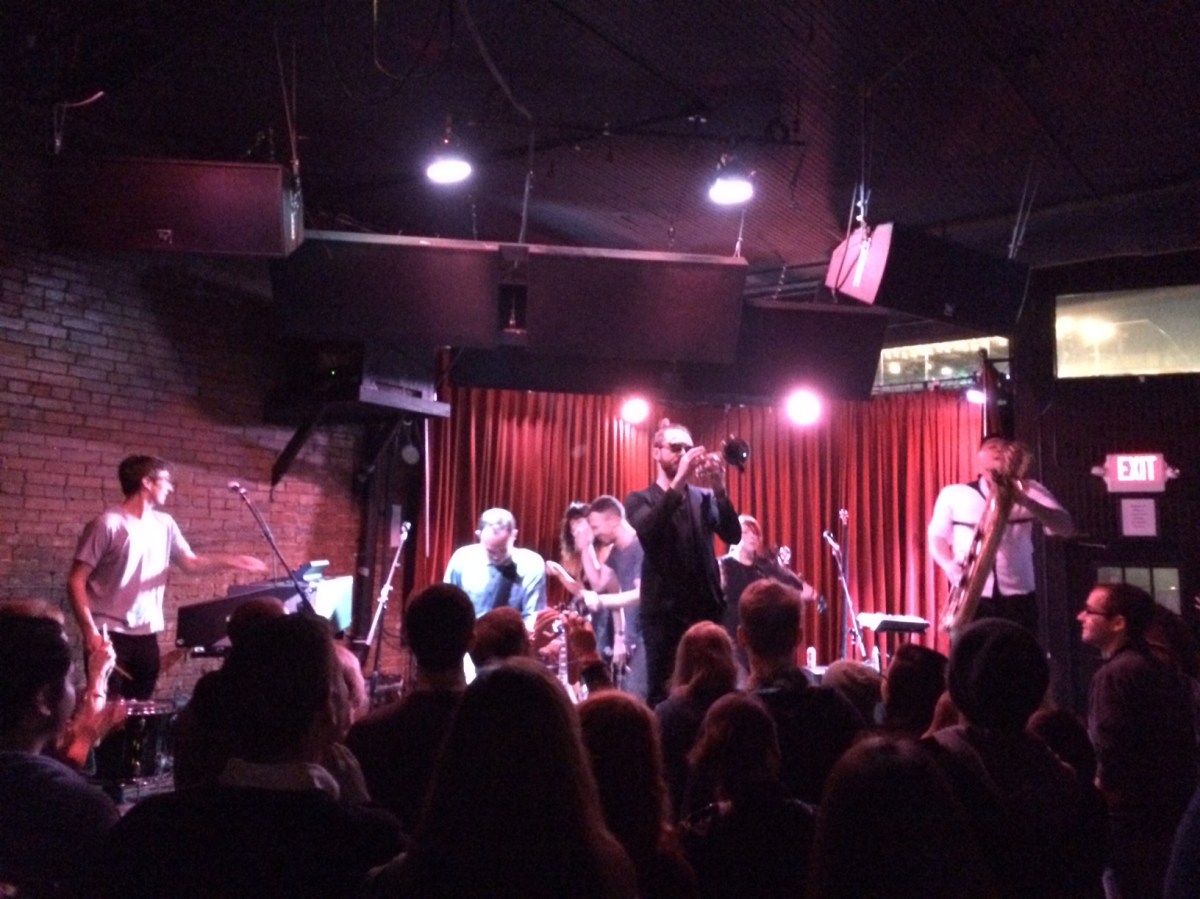
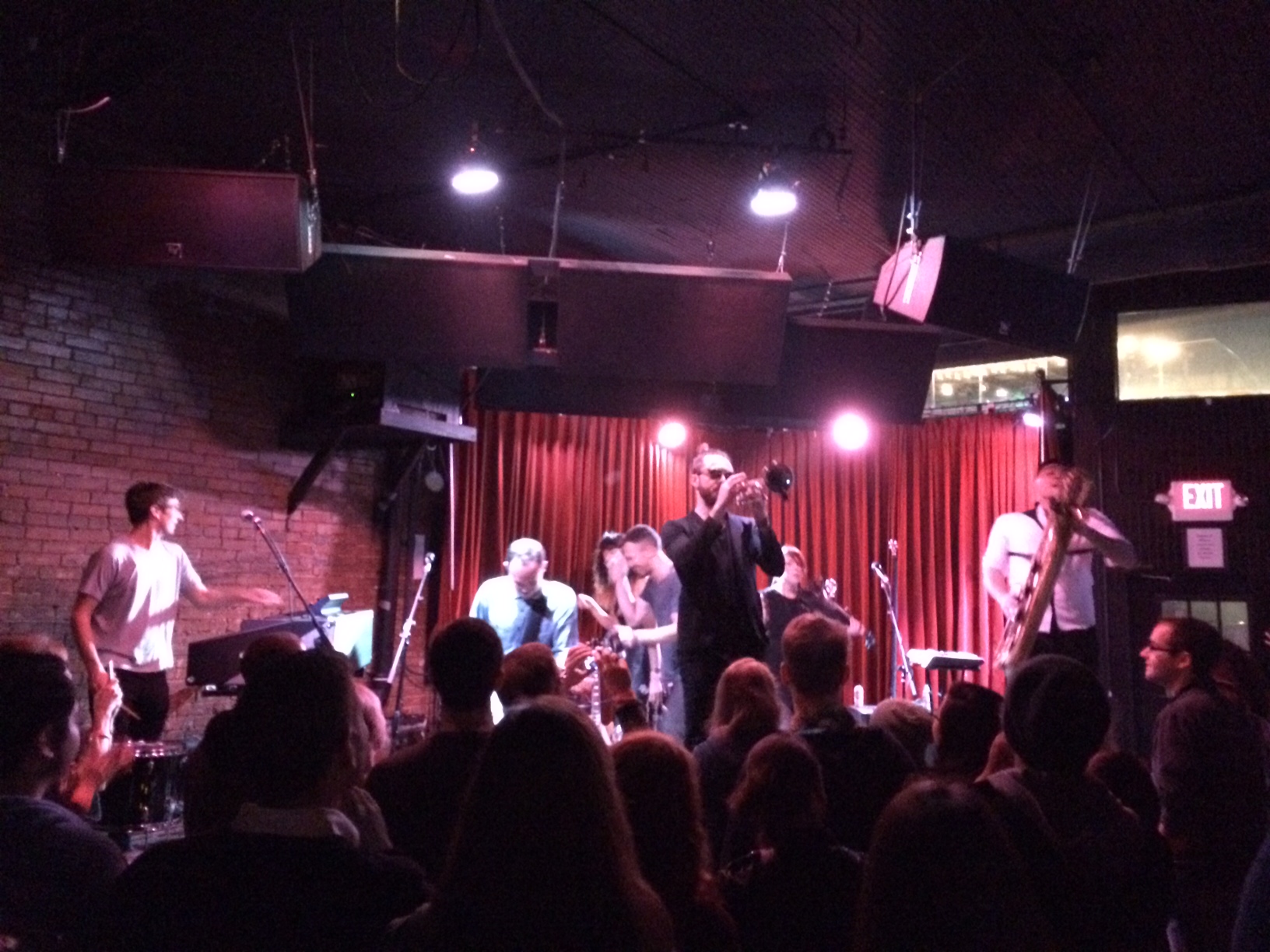
San Fermin is a band that reconfirms why you see live music in the first place, and makes you wonder how in the hell, you were lucky enough to be one of 60 people to watch their magic onstage.

Dallas audiences suck. It doesn’t seem to matter who takes the stage, it could be fucking Outkast, nine times out of ten at least 85% of the audience at any given show will stand emotionlessly for the entirety of the set. I don’t get it, and I don’t like it, but I’m resigned to it.

So the odds were certainly stacked against Brooklyn-based San Fermin, a relative unknown in these parts, when they took the stage at Dallas’ Club Dada on Sunday night to all of 60 people.

photo 1

First, about the band. San Fermin is really Ellis Ludwig-Leone. Ludwig-Leone, a classically trained musician, composed all the music and lyrics for San Fermin’s self-titled debut which dropped late last year.

His music is hard to categorize. The debut is a concept album of sorts, tracks alternating between experimental musical interludes, and big, boisterous anthemic ballads. It’s a conversation between a man and a woman (reminiscent a little of the Stars duo), about love, loss and being human, and before I wax poetic, I will offer that, yes, the lyrics, with their quasi-religious bent, can border on schmaltz, but, unlike Stars, they always seem to be grounded in reality, albeit a rather hyper-serious, emo reality.

Make plans and we’ll buy new things, try to fix it up Sonsick at the tee-ball games, oh, oh,” the lead female vocalist sings in one of the album’s standouts.

It’s baroque, avant pop in the vein of Sufjan Stevens, the Antlers or the Dirty Projectors, infused with that experimental, classical finesse the Dirty Projectors are famous for, but Ludwig-Leone imbues his music with more stunning, “weak knees,” moments thanks to a penchant for emotional climaxes.

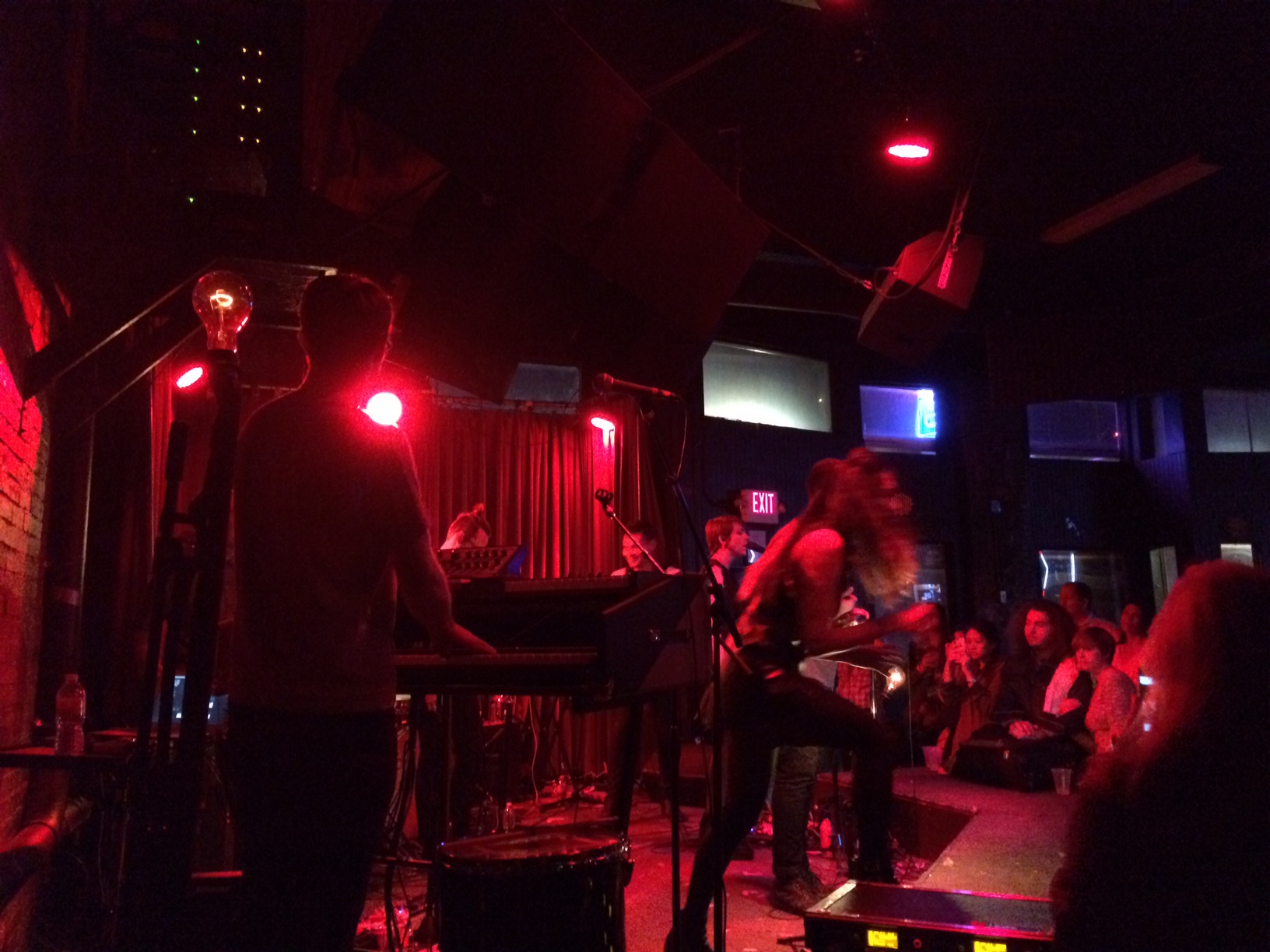
The members of the band fluctuate, Allen Tate, the lead singer whose voice and vocal stylings have drawn comparisons to the National’s Matt Berninger, seems to be the mainstay. The seven-member band onstage at Dada was composed of the female lead (a part gorgeously recorded on the album by the Lucius duo), a trumpet player, guitarist, drummer, violinist/back-up vocalist, a saxophonist and Ludwig-Leone on keyboards. It’s a big band.

photo 3

So about Sunday night. Here’s the thing, no matter what you think, or didn’t think, or thought you thought, of “San Fermin,” the album, assuming you thought of it at all, when you see San Fermin the band, live on stage, it’s like getting pumped with some serious auditory electricity, a “sonic baptism” as a previous reviewer called it. Live, the serious, polished band of the album, turns into a powerhouse of indie pop and experimental jazz. They’re so obviously kids having fun, but they just happen to be kids with serious musical chops indulging in the opportunity to sing some of the most breathless indie pop of the last couple of years, and despite the very real risk of taking the rather serious pop of the album too seriously, they know how to tread the line between sober solemnity and energetic enthusiasm.

The band ran through almost all of the songs from the album, improvising a little bit, but for the most part, mimicking the recorded versions. As expected they started with album openers “Renaissance!” and “Crueler Kind,” before launching into some new songs Ludwig-Leone has written on tour.

“Bar,” with its blaring horns and an especially powerful back and forth between the two lead singers was unsurprisingly a highlight, as was the conclusion “Daedalus (what we have),” with its softly, billowing keyboard and strings which, as with everything Ludwig-Leone writes, stops just before it explodes.

So yeah, back to Dallas audiences sucking. Despite the fact that the audience for the show was composed of, like I said, I would guess about 60 people (if only I could blame that on it being a Sunday), I couldn’t tell you the last time I felt a Dallas club with that much energy.

By the time the band was wrapping up their twelve-song set, everyone in the place seemed to be dancing, throwing their fists, clapping, singing, and most of all, smiling.

The exhausting tour schedules these bands are usually in the middle of during a stop in Dallas, typically ensures that bands, if they don’t seem tired, at least don’t seem too excited about their material anymore. Understandable. But these kids could have been singing these songs for the first time for all we would have known, and instead of seeming more tired as the show went on, they seemed to suck up more and more energy as the set wore on, and it was infectious.

San Fermin is young, and they’re un-tested, and who knows what a follow-up to the epic concept album that is “San Fermin,” will look like. But the show on Sunday night at Dada was one of those shows that makes you question the sanity of your friends, and really anyone, who wasn’t there. You know those shows. A show that reconfirms why you see live music in the first place, and makes you wonder how in the hell, you were lucky enough to be one of 60 people to watch the magic onstage.

Let’s Talk About the Inaccessibility of Modern Art

There’s a certain segment of the population that seems to perpetually bemoan the lack of curious consumers.

We sit around at bars discussing the lack of an audience for theater, music or art, and host panels seeking to discover how we build the new audience for art, theater or classical music.

Why are there so few people interested in stepping out of their comfort zone and experiencing something new?

In the theoretical once upon a time, and probably the actual one, everyone (or at least most) read about art. Everyone went to the theater. Everyone knew the composer of the day. Everyone discussed the arts and everyone loved them.

Then the 20th century happened. In the words of composer and critic Theodor Adorno, “New music has taken upon itself all of the darkness and guilt of the world.” Sure he was referring to music but the assertion could just as easily be broadened to include the entire world of art.

European and American artists and composers and writers in the early 20th century saw violence like the world hadn’t seen for hundreds of years. The manifold amount of changes wrought by technology and innovation in fin de siècle Europe and America meant nothing about life before would ever be the same. Then World War One and World War Two turned the world completely upside down. How could we go back to the way the world was before? The answer was that we couldn’t.

Modernism was here.

This sense of unease and uncertainty about the future and growing economic disparity, complicated by death on an unforeseen scale, inevitably made its way into the art world with dramatic results.

“Everything purely aesthetic has no cultural value,” philosopher Otto Weininger once said, more or less capturing the zeitgeist of art in the early 20th century.

The bourgeois worship of art, in the words of Alex Ross, turned modern artists away from aesthetics at the same time as it “made possible the extremes of modern art.”

Artists were infallible, as they had been for many years, but all of a sudden artists began increasingly isolating themselves. Adamantly rejecting the tastes of the masses, their creations became more and more difficult, almost impossible for most people to understand, but we were more or less forced to accept them. The incomprehensibility of life demanded nothing less.

The history of 20th century art is a study in revolution and counter-revolution; a continuous struggle on the part of artists to move further and further away from public taste and approval into an insulated world of other artists and the like-minded that could appreciate their complex, physical art and music. Familiarity was totally rejected.

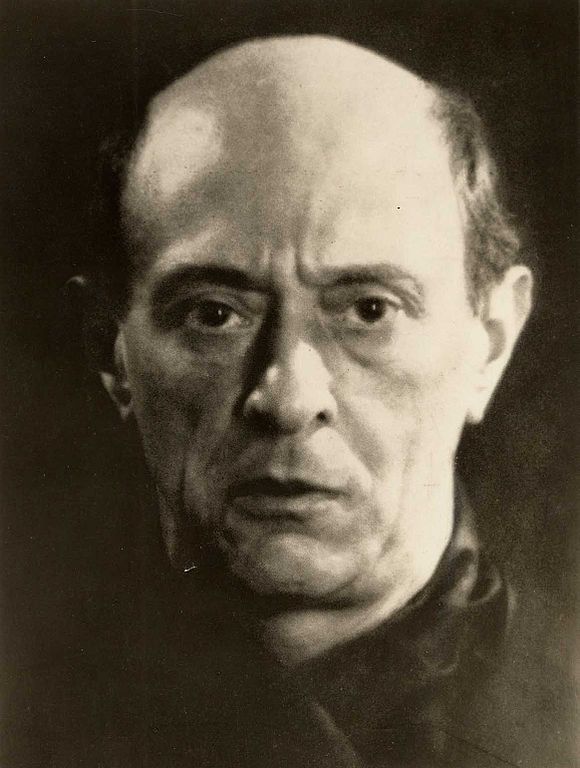
In the words of Schoenberg, “If it is art, it is not for all, and if it is for all, it is not art.”

Arnold Schonberg
Arnold Schonberg

Artists and musicians didn’t need or want the public, something brought to a culmination with composer Milton Babbitt’s admonishment to isolation, “Who cares if you listen?”

Who cares indeed.

Which brings me to my point. I’m edging closer and closer to the conclusion (and for those of you who reached it years ago, don’t hate), that contemporary artists, musicians, etc., don’t want you to like their work. When art became conceptual, cerebral and philosophical, it forced artists into a world of art education in which technique matters, but only in relation to the idea, which is paramount. Naturally the ability to elucidate the idea takes practice, often years of it, practice which is aided by arts institutions who have commodified centuries of art into these ideas, offering classes in critical theory and performance studies.

When an artist spend as much time thinking as they do creating, it’s little wonder they emerge with a rather stilted way of talking to and interacting with those who haven’t devoted years of their life to academics.

That of course translates to their art, and well, we’re left with Babbitt.

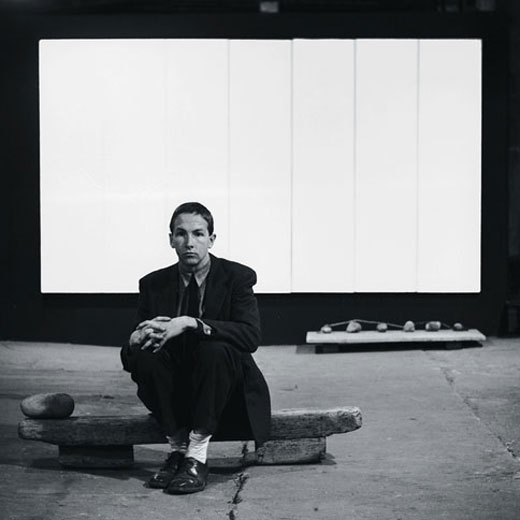
Rauschenberg with White Painting
Rauschenberg with White Painting. Yes, it’s art. But mostly it’s an idea.

I say all of this not to villainize the over-educated artist. I understand. If I too could throw around Wittgenstein’s ideas like I was discussing something that happened yesterday, I’m sure I’d have a hard time not feeling like my art was above most people’s level of comprehension.

I say all of this as well, knowing full well that there are numerous artists making work that is easily accessible by large swathes of the population and does not suffer critical revulsion in spite of its lack of academicism, (although typically there is a very academic explanation for even an apparently unacademic work of art).

I say it simply because it is. And it’s a massive shift in the way art has historically been approached and created. AND it’s a transformation in thought that doesn’t get a whole lot of discussion.

I don’t know if it’s a good thing or a bad thing. I personally enjoy digging into the research behind the work, learning more about the theorist who or personal history that informs a work. But I understand that many people don’t and/or don’t realize that that is now part of the artist/audience contract.

Schoenberg was one of the first to express the ideology behind the new art that was defined by its inaccessibility rather than vice versa, but he helped to launch a revolution in the ways we do or don’t approach art. It is what it is. But lets stop pretending like it isn’t.

overcoming fear and engaging with art

I’ve long struggled with the difficulty we have in approaching ‘modern art.’

I’ve written previously on the complicated nature of beauty and innovation, the ideas on which, for many years, our acceptance of art, or lack thereof, was based.

It goes without saying that most art today is not beautiful insofar as we have historically understood that term. And it is immediately obvious to most who wander into art galleries and museums today that technical ability and innovation is also not always easy to determine.

Art today is based on ideas, so what, as one unfamiliar with an artist’s ideas, are we to make of this new art?

There’s no easy answer as I’m discovering, but a recent Brain Pickings post pointed me to a little book called “Art as Therapy” by Alain de Botton and John Armstrong.

The title immediately conjured images of people in hospital rooms with Monet’s lilypads gracing the walls for me, but the word therapy in this case is I think a little misleading. I would propose a more appropriate characterization. Art as a means to living a better life.

De Botton and Armstrong propose using art as a way to help us communicate our emotions to others or illuminate half-formed thoughts, for example.

In particular, the two discuss art as a method of overcoming our very human fear of the ‘different.’

In de Botton and Armstrong’s therapy, as in I would imagine, most therapy, they expect full engagement. In attempting to overcome their fear the art-goer would undertake three steps.

1. Acknowledge the strangeness we feel encountering art that is new or different and allow ourselves to feel it
2. Get to know the minds of those that created the art (potentially through reading, a study of the culture or writing of the artist, and so on)
3. Look for points of connection with the artist, however tenuous and embrace them

It may sound rather pedestrian and obvious, but at least, for me, reading such an obvious roadmap of how to ‘overcome fear’ through art, made me think, for the first time, that perhaps it’s fear that discourages us from engaging with art and therefore understanding it.

The more I think and the more I read, my rather lengthy attempt to understand our society’s utter lack of interest in and understanding of art, and in this case I mean auditory, visual or performing art, has been rather misled.

In looking for ways to explain away the elitism inherent in fine art, and blame the art world itself, I’ve failed completely to account for our own complicity in the art world’s growing insularity.

A certain contingent of the art world will always believe art (especially that made in the last century) is reserved only for a select few, the sentiment being expressed rather curtly by Arnold Schoenberg in a quote I recently came across, “Art is, from the outset, naturally not for the people.” Despite the snobbish view of some, I don’t think that is the only viewpoint held by currently working artists.

It’s my understanding that some artists actually appreciate the public’s engagement with their art, instead of shunning it, but engagement implies the expense of energy.

Instead of stopping at “I don’t understand,” we would have to move to step two, “get to know the minds of those that created the art,” and that’s where the going gets difficult.

Just as with anything truly worthwhile in life, understanding and appreciating art isn’t easy, but not only can an attempt to do so improve your life (and your conversation skills), it can also help you overcome fear.

the complicated nature of art and criticism in the contemporary world

People that truly appreciate art and architecture often appreciate most of all an artist’s ability to create something new. To force us to think about something in an entirely new way, to invoke surprising feelings or to stimulate curiosity and possibility.

But that appreciation is often based on nothing more than vague, ethereal reactions we may have towards a visual or auditory object and our experience of it.

Can the value of art really be summarized in such vague, emotive and all too relative judgements? And if so, why is our society’s engagement with art steadily shrinking?

Once upon a time, 150-200 years ago, art was beautiful. Not that it isn’t now. But once upon a time, we had one definition of beauty.

A lot has happened in those 150 years. In our headstrong rush towards a pervasive relativism, art, naturally, got complicated.

It was inevitable. We have lived through more life-altering evolutionary churning in the past century than many before us combined, technology being perhaps the main contributing factor in the change.

Existence is no longer simple. We’re used to that.

But despite the manifold amount of change, for some reason, the cultural dialogue surrounding art is much the same as it was 150 years ago.

Certainly we’ve adjusted for the conceptual nature of the art object and the philosophical nature brought along with a redefinition of art. But despite the relativistic society in which we live, a community in which anything goes, and I dare not press my religion, cultural ideology, style, taste in music, etc. on you, the art world still functions as it did before. An exclusive cadre of ‘critics’ and ‘academics’ determines who enters into the halls of the fine art world and that same club of art experts determines how we should talk about them.

The nature of today’s artists too has exacerbated the exclusivity of the art world. It is no longer enough to have a knack for painting or sculpture, in fact, you’re almost better off if you don’t. Today’s artists aren’t artists in the 19th century sense of the word, today’s artists are philosophers.

Artists have always been thinkers, I know this. It would be impossible to create even the simple beauty of Rembrandt or Van Eyck without a deep understanding of humanity, the world and religion, an understanding only possible through years of thought and meditation.

But today’s artists don’t stop there. They don’t meditate on just the world and humanity, allowing their understanding derived therein to inform their art. No. Relativism and the steady decline of our interest in, and ability to decipher, traditional philosophical writing, have combined to make today’s artists into today’s philosophers. Partly out of necessity and partly out of the complicated nature of beauty and taste in today’s world. An understanding of life today, after all, is inextricably tied to much more than religion and nature thanks to the suffocating grip of technology.

And if today’s art also functions as a stand-in for today’s philosophy, then art critics more or less, function as philosophers in their own right.

100743

Raphael Rubinstein writes in a recent review of MoMA’s Sigmar Polke Retrospective on the “mania for explanation,” wondering when it became such an imperative that artist’s explain their work to their audience.

“It’s as if their works never go out into the world without the company of their voices, which come to us via interviews, artist statements, video documentaries, panel discussions and artist talks,” he says.

Rubinstein’s arrogant bewilderment on this matter is an excellent illustration of the art world’s obliviousness to its own insularity.  When art is philosophy the artist statement and generally intimate knowledge of the artist’s worldview is imperative to an understanding of the art. Certainly once you’ve had the years of experience of a Rubinstein or otherwise, you may be able to deduce an artist’s objective without background. The rest of us, however, remain lost.

He then transitions into Sigmar Polke’s apparent refusal to explain his work. The few times Polke did speak in public almost always consisted of less than sincere responses to interview questions and art-world parody.

I don’t pretend to know why Polke refused to explain his own work but I would postulate it has much to do with a conscious rejection of what the art world was becoming.

Despite the rejection of Rubinstein, and I’m sure others, we started down the path of lengthy explanation when we began appreciating art less for its beauty and more for its originality in regards to the artist’s intention.

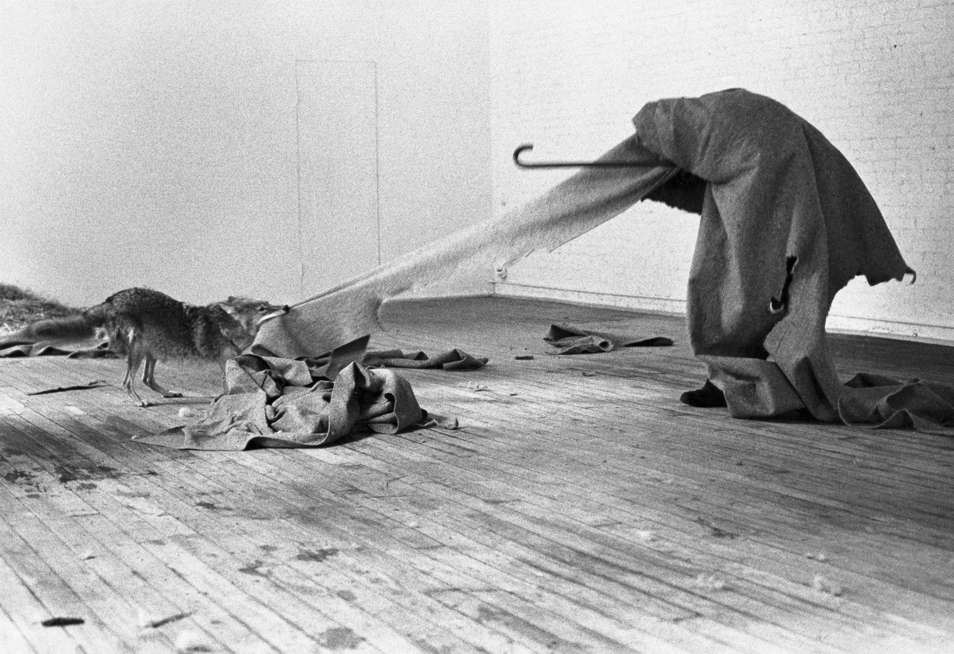
beuys_coyote_09_sized1

It’s elitist to expect the casually interested art lovers to understand why Joseph Beuys locking himself in a room with a coyote for several days is worthy of our attention and respect without written and verbal explanation from Beuys himself, and the critics who support him, of the philosophical underpinnings which prompted the exhibition.

If Beuys wanted to be taken seriously, and even have a gallery willing to support the performance in the first place, he needed a damn good reason. And that proposal and artist statement had to be good enough to impress the critics and thereby the public.

The writing is necessary.

And here’s the rub. I’ll go with Rubinstein to the natural conclusion of all of this, the need for explanation has given rise to too much explanation. Too much explanation at the expense of emotional response.

Once upon a time, when beauty was simple and writing wasn’t vital to our understanding of a work of art, we were allowed to emotionally react to a painting or sculpture, although the range of emotions we allowed ourselves was almost certainly smaller 150 years ago.

The philosophy of today’s art is a double-edged sword.

On one hand, art as the expression of a philosophical construct or ideological deconstruction allows the possibility to engage with a piece of art on a deeper level and to experience one of today’s most influential expressions of philosophical thought, on the other, when our discussion of art seems to imply that is the only way to respond to a piece of art, we’re excluding the audience who would choose to engage with art on a more feelings-based, reactionary level.

And that’s where the art world has acted against the public in its perpetuation of a form of art writing that doesn’t allow for individual taste and the possibility that art can be appreciated in its own right in the context of our visual and emotional responses.

Where does that leave us?

With an insular art world that refuses the rest of us the experience of our own “possibility” with art, as Jeff Koons puts it.

We’re left with a public who insist they “don’t understand it” and therefore cannot, and do not, meaningfully engage.

jeff-koons-woman-in-tub

We spend so much time writing and thinking about how important art is, and performing academic studies on how our “brains are wired to appreciate art” and how art uplifts us, feeds our spirit and on and on and on. But most of us cannot appreciate art because we’re still trapped in the endless cycle of self-perpetuated ignorance, a cycle in which the art world is complicit and unsympathetic.

Koons puts it simply. “I create art to inspire feelings,” Milton Glaser puts it another way when he says “The deepest role of art is creating an alternate reality.”

Put in my words? Art can very much be about sensation and emotional response and for many artists that create, that’s all that it is.

Therefore, it should be about learning what you like, not what the critics like, and not what is (necessarily) in museums.

The catch?

You have to expend the effort to discover what you like. That means curiosity, discovery and engagement.

Yes, art will still remain complicated and contemporary art will always be something of a mystery, even to many of the critics who engage with it daily. But maybe it doesn’t have to live only in the realm of academia, maybe art can continue to evolve and our appreciation of it, flourish yet again. Maybe fine art can once again be a part of the popular culture conversation.

What happens when alternative culture is co-opted by the mainstream?

David Foster Wallace may have been one of the most outspoken cultural critics to point out that although at one point irony was a powerful weapon of artistic response, especially in the 60’s and 70’s when trust in establishments such as the government seemed especially misplaced, irony has since become so mainstream it is now necessary in the creation of art simply in order to achieve acceptance. To imply your cultural complicity.

Sukhdev Sandhu, another cultural critic, refers to the same in an essay on music in which he describes the trajectory of critically acceptable music. The sentimentality and ‘schmaltz’ of earlier musical periods has been replaced in the recent past with the idea that music’s value is defined more by its ‘realness’ and ‘truth.’ Scholarly writing on music today looks for neophilia, an illustration of the musician’s subcultural awareness, or, as in Wallace’s take on irony, resistance towards the mainstream. Emotion, ‘yearning,’ as Sandhu says, is rejected, critical acceptance being reserved for the alternative.

The problem?

The alternative has now become the mainstream.

We’ve reached a point in Western culture at which everything we once viewed as revolutionary or anti-establishment has become the establishment.

Sure irony was once a culture’s useful critique, a tool to “Lay waste to corruption and hypocrisy,” to respond to the vapidity of US culture. Certainly, the emergence of ‘alternative’ music in the late 20th century; the anarchic sound of the Sex Pistols or the vocalization of a marginalized subculture in early West-coast rap, served as a much needed dose of reality in a world whose popular music had for too long been dominated by the majority.

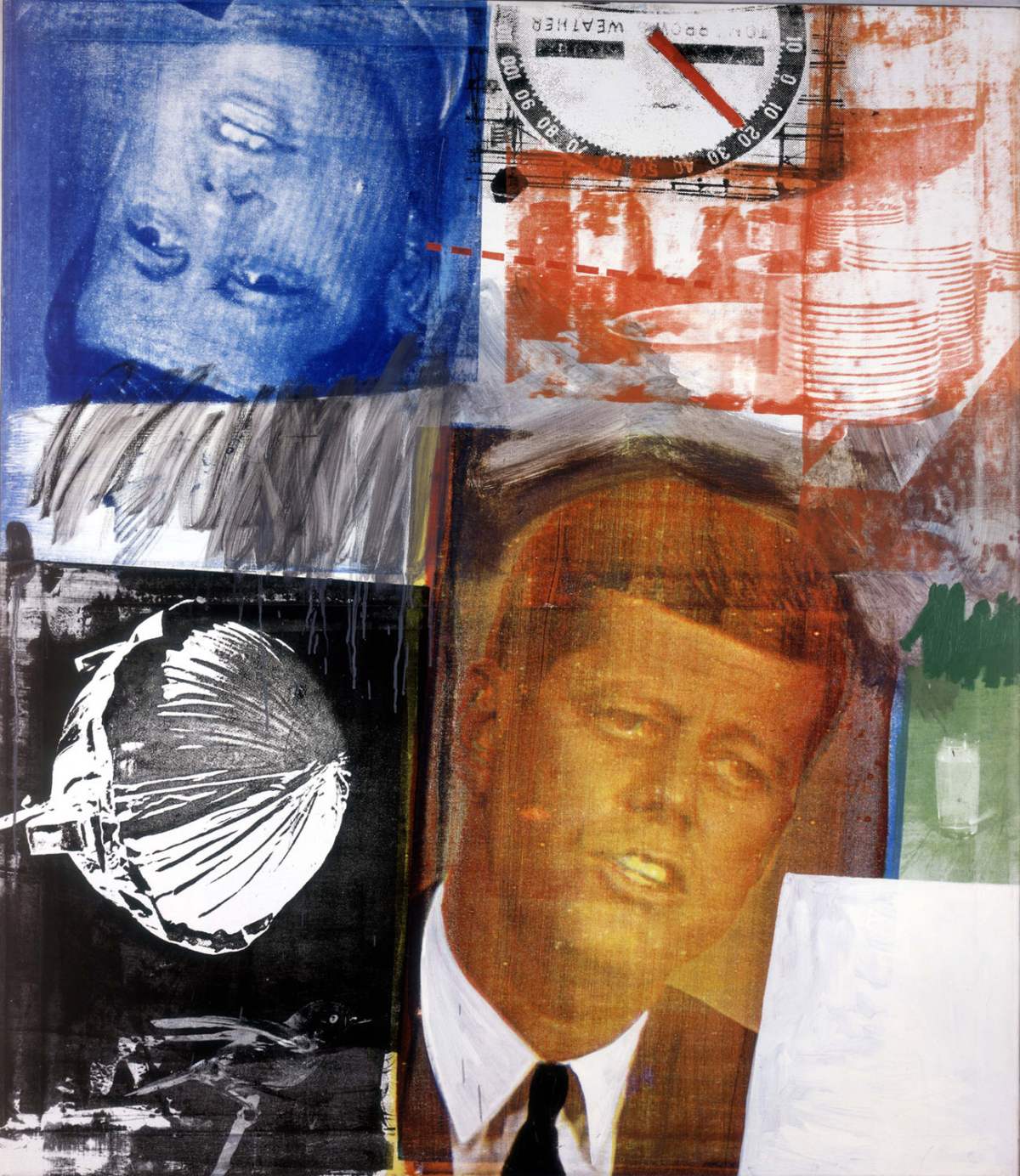
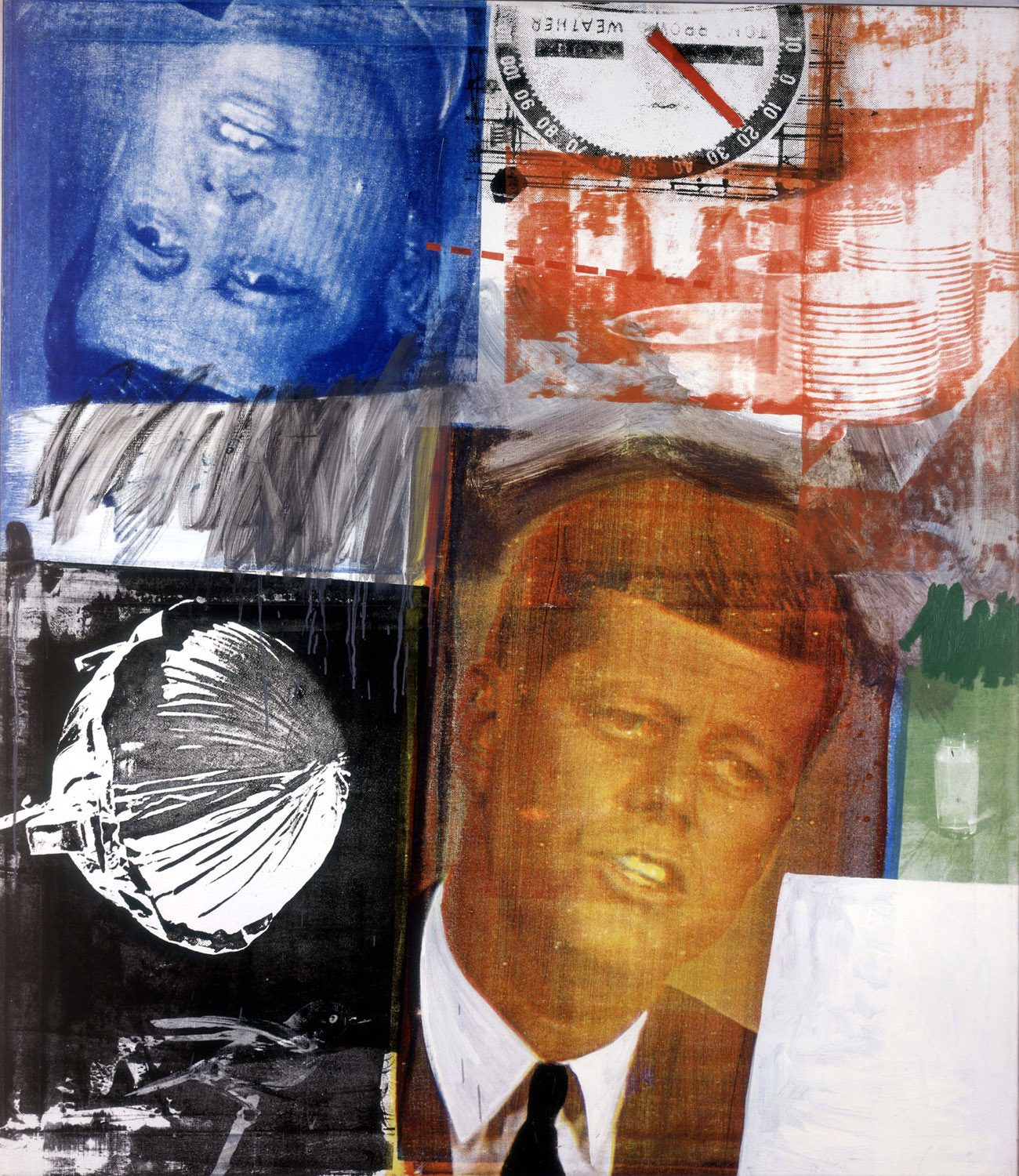
But imitating the revolutionary work of a Thomas Pynchon or a Robert Rauschenberg or recreating the sound of 2Pac or the Ramones isn’t, in and of itself, grounds for artistic acceptance. A groundbreaking new way of making art is groundbreaking in its novelty. When the work is recreated, the revolution is over, and, well, you get where I’m going.

Robert Rauschenberg - Untitled, 1963
Robert Rauschenberg – Untitled, 1963

When Mike Will Made It produces Miley Cyrus’s albums. When LA’s Hammer Museum produces a show of artists who practice institutional critique. When upper middle-class teenagers wear GG Allin t-shirts….

The ‘alternative’ has lost its definition.

David Foster Wallace:

And herein lies the oppressiveness of institutionalized irony, the too-successful rebel: the ability to interdict the question without attending to its subject is, when exercised, tyranny. It [uses] the very tool that exposed its enemy to insulate itself.

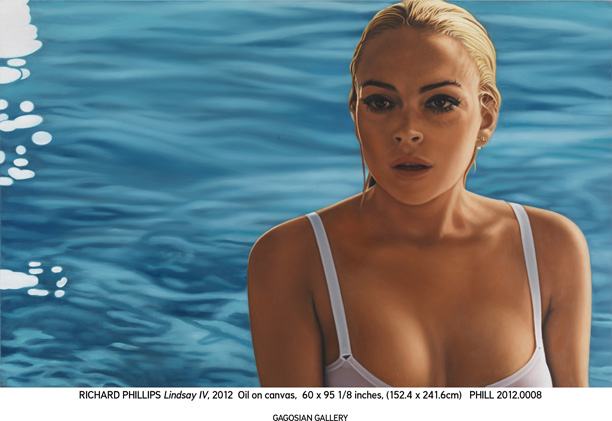
Whether its irony or some other form of cultural critique in art or music, when something becomes what is expected, we stop trying. When artists, I’ve heard the example of Richard Phillips, can create insincere art contributing nothing new to the conversation, and we are more or less asked accept it at face value ‘because it’s ironic,’ we’ve begun the gradual destruction of an intelligent culture. We’ve stopped asking questions and we’ve stopped having to explain ourselves, assuming, because we are perpetuating cultural norms, our work is self-evident and valid in its own right.

phill-2012-0008-web

And irony (insert other culturally acceptable means of expression here) means safety.

So what’s next?

In short, the risk of failure. The risk inherent in creating art that is different and perhaps in direct contrast to what the art world has been trained to accept. Risk being labeled sentimental or ‘full of conviction.’ And perhaps the idea of good art can move past irony into sincerity into an art that can ‘open possibilities for the future’ instead of wallowing in its own nihilism and irony. After all, being right is the opposite of being original. You can’t be both.

The move in music criticism towards acceptance and the well-argued and well-defended justification of divergent musical styles once considered inauthentic, naive or simplistic, is a start. When other art forms, visual art in particular, can begin to ask the same of its critics, perhaps a new kind of artist will again grace the spotlight and the age of an absolute which requests the ironic or the rebellious before originality and authenticity can be granted, will be over.